Thursday, January 30, 2014

Chicken Labels- Confused?


By: Coach Maria

When it comes to making healthy food choices for you and your family, things can get downright confusing when purchasing chicken.
Why?
Chickens come with a gazillion different labels and claims and many of them leave us wondering what the real truth behind the label actually is.
Some of the claims are important to us and some (most) are marketing gimmicks or just plain absurd.
Read below to learn how to decipher the labels and what they DO and DON'T  mean.
What the Organic label means
  • Fed organic/non-GMO feed
  • No Antibiotics
  • No pesticides
  • Uncaged (in barns or warehouses or pasture)
  • Some access to outdoors
What the Organic label DOESN'T mean
  • No required access to grass (could be concrete slab outdoors)
  • Crowded conditions could still be occurring
  • No required time outdoors (some can mean as little as a couple of minutes)
What Humanely Raised labels mean
  • These chickens are treated right, which means chickens have optimal nutrients for you
  • Look for the following labels to be sure the chickens are humanely raised:
What Antibiotic Free/No Antibiotic labels mean:
  • US law DOES allow antibiotics, so the chickens with this label do not receive them.  Chickens that are ill and are given antibiotics do not have this label.
What Vegetarian Fed labels mean:
  • No animal by-products were fed to these chickens (as is done with conventional chickens), meaning no bone meal from cows, pigs, etc.  *Although chickens are omnivores and are meant to be eating bugs - not vegetarian feed - choosing this label over no label is much better, given the fact that they would be fed other animal parts instead.
What Natural/Naturally Raised labels mean:
  • NOTHING - this claim carry's no weight.  It is unregulated and meant to make you believe the chickens were raised naturally.
What Hormone Free/No Added Hormones labels mean:
  • US law DOES NOT allow chickens to be given hormones, so having this label on there is quite funny.  The manufacturers want to make you believe that you are getting a more superior quality chicken, when, in fact, you are purchasing something that is not different.
What Free Range labels mean:
  • Tricky on this one.  Although it means nothing on egg cartons (the term is not regulated), on chicken meat, it is a little something.  However, it doesn't mean as much as you might think - the USDA requirement for the use of this term to be stamped on the package is a mere 5 minutes of open air time for these chickens.
Ok, now that you know the truth behind some of these labels, how can you - as a savvy consumer - make the best choice for you and your family?
Continue to read below for the best, better, good approach:
Best (look for both of these labels together):
  • Organic
  • Humanely Raised
Better (more affordable than "best", look for these labels together):
  • Humanely Raised
  • Antibiotic Free/No Antibiotics
  • Vegetarian Fed
Good (if you can't find or afford the choices above):
  • Antibiotic Free/No Antibiotics
  • Any fresh chicken is much better than processed chicken products like chicken nuggets, chicken patties, etc.  The quality of processed chicken products drops monumentally.
  • Buy chicken breasts, the cheapest you can find.  The leaner cuts of chicken will contain the least amount of toxins, since the toxins are most concentrated in the animal fat.
     

Monday, January 27, 2014

Tips For A Tasty Green Smoothie


Let's be honest, green smoothies can be really disgusting if prepared incorrectly.  They can be warm, thick, pulpy- you get the picture.  Here are a few tips to making delicious green smoothies:

1.  Start out with mild tasting greens like spinach.  Then work your way up to more intensely flavored greens like kale and parsley.  
2.  Follow a recipe for your first 3-5 attempts.  Take it from someone that has tried a lot of times- they have already gone through the trial & error phase.
3.  If you find yourself chewing your smoothie, take an extra 60 seconds to put the smoothie through a mesh strainer.  That way your smoothie will be smooth, and therefore much more pleasant. 
4. Include something creamy in your ingredient list.  I'm not talking about milk or half and half- bananas are the best choice.  But if you aren't a banana lover try peaches or pears.  Avocado will also do the trick. 

Enjoy! 

Thursday, January 23, 2014

Slow Cooker Turkey Breast


By Coach Maria - Salus Nutritionist & Food Expert

For the busy and/or working cook of the family, this recipe is a life saver! 

Dump the ingredients in a crockpot before you head out the door for the day and come back home to wonderful aromas and a delicious meal.

It doesn't have to be a holiday to serve succulent turkey breast for your meal and, the best part, this recipe will yield enough for leftovers, so you can plan other meals for the week with the turkey already done (leftover turkey quesadillas anyone?).

If you don't have a large enough crockpot for the size of the turkey breast - no worries - just get a smaller turkey breast!

Ingredients
Serves 12-14

8lb turkey breast
1.5 tblsp onion powder
1 tblsp Italian seasoning
2 tsp paprika (smoked is even better!)
1.5 tblsp garlic powder
1 tblsp sea salt
3/4 c organic, low sodium broth (optional)*

Rinse off turkey breast, pat dry and place in crockpot.
Sprinkle with paprika (this will give it a nice golden color).
Mix the rest of the seasonings and sprinkle over the entire turkey breast.
Cover and cook on low 8-10 hours.
(*No liquid needed, the turkey will create its own juices.  But if you want some extra liquid for gravy, add 3/4 cup organic, low sodium broth)

Serve with your favorite roasted vegetable or rice.

Nutritional Information per 8 oz. serving:

Protein:    62.8g
Carb:            .7g
Fat:            3.7g

Thursday, January 16, 2014

2 Ingredient Gluten-Sugar-Flour Free Pancakes


By Coach Maria - Salus Nutritionist & Food Expert

No time in the morning?

No excuses to skip breakfast with this recipe!

With only 2 ingredients*, you

can have pancakes on your plate fast!

No flour, no sugar, no boxed pancake mixes - only wholesome ingredients.

Ingredients
Serves 2

1 ripe banana
2 eggs

Place banana and eggs in food processor, blend until smooth and creamy.
Lightly grease skillet over medium heat.
Pour 1/3 cup batter at a time and cook about 1 minute on each side.


Nutritional Info:
per serving

Protein:   6.2g
Carbs:     13.8g
Fat:         4.8g


Optional add-ins:

Cinnamon
Nutmeg
Vanilla

Optional toppings:

Pure maple syrup
Berries
Almond butter
Ghee


Wednesday, January 15, 2014

Get The Facts!

There is a common misconception that all body fat is bad. In truth, some body fat is needed to protect the person’s health as well as supplying a reservoir of energy for performing various body functions. To better understand this, the total weight of body fat can be subdivided into three separate categories:

Weight of “Essential Body Fat” - This amount of body fat is needed to protect the body from infectious diseases and to protect the internal organs from bruising damage.

Weight of “Reserve Body Fat” - The amount of additional body fat that does not cause any medical risks, and provides a reservoir of “fuel” for use by the body.

Weight of “Excess Body Fat” - The amount of body fat that is over and above the combination of Essential Body Fat plus Reserve Body Fat. Excess Body Fat causes the risk of serious health problems such as strokes, heart attacks, diabetes and certain forms of cancer.

Contact Team Salus for your personal “Ex-Prescription Analysis” and get the facts.

www.saluslifestyles.com

Tuesday, January 14, 2014

Protein Pancakes

Who says you can't eat pancakes?

1 Scoop Vanilla Protein Mix

1/2 Banana (Mashed)

1/2 Tablespoon Almond Milk

1/4 Cup Egg Whites

1 Teaspoon Cinnamon


Direction: Completely Mash banana with almond milk, then stir remaining ingredients. Spray your skillet with cooking spray, turn on medium-low heat. Cook until lightly brown on each side. Enjoy pancakes toped with greek yogurt, mixed berries and cinnamon.

Thursday, January 9, 2014

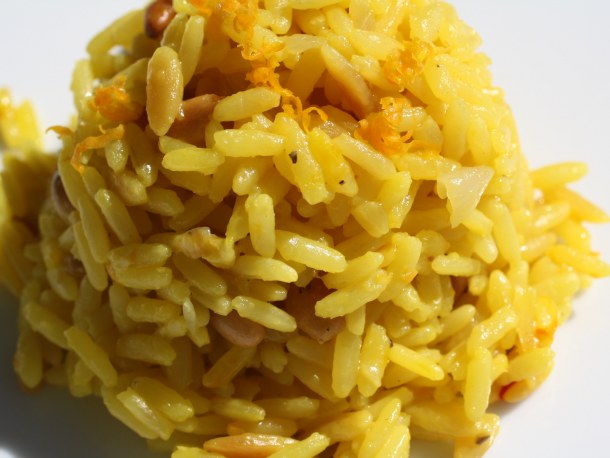
Saffron Rice with Pine Nuts

Saffron Rice Pilaf

By Coach Maria - Salus Nutritionist & Food Expert

Sometimes, coming up with an appropriate side dish can be more challenging than the main course, but this simple rice dish is versatile enough to go with any main course dish.

The key ingredient is saffron, which is subtly floral and aromatic.  Not everyone has the saffron spice on hand (you can find it at any grocery store and Walmart seems to have the cheapest price), but you should run out and get some, since the flavor of this spice should be experienced at least once.

You could always substitute with turmeric to give you the golden color, but the flavor will be different (not saying it will be a bad flavor at all, just different).

Ingredients
6 servings
(about 2/3 c per serving)

1 1/2 tblsp extra virgin olive oil
1/3 c chopped shiitake mushroom caps (or sub with any other mushroom)
2 tblsp minced onion
1 1/4 c Arborio (or other short grain rice)
2 1/2 c low sodium organic chicken broth (homemade stock is even better!)
1/4 tsp sea salt
1/8 tsp crushed saffron threads
Zest of 1/4 orange
3 tblsp pine nuts

Preheat oven to 400 degrees.
Heat oil in ovenproof saucepan.
Add mushrooms and onion; cook 5 minutes.
Add rice, broth salt and saffron; boil.
Cover pan with foil, place pan in oven; bake for 15 minutes.
Remove from oven; let stand, covered, 10 minutes.
Stir in orange zest and pine nuts.

Nutritional Information per serving:

Protein:    2.5g
Carbs:      16g
Fat:          3.5g